Enterprise AI Architecture: Trends, Implementation, and Strategy
Explore the evolving landscape of enterprise AI architecture in 2024, including cloud-native and hybrid platform trends, data and AI/ML infrastructure patterns, and strategic governance frameworks. Gain actionable insights for designing scalable, secure, and compliant AI systems that align with business goals, mitigate risks, and optimize operational costs. This guide empowers senior architects and technical leaders to make informed decisions and plan effective AI adoption roadmaps at enterprise scale.
Section 1: Landscape & Trends
Enterprise AI architecture in 2024 is characterized by an increasing shift towards cloud-native and hybrid deployment models, as enterprises balance scalability, flexibility, and regulatory compliance across on-premises and cloud environments. Platforms encapsulate modular AI/ML services, leveraging containerization (e.g., Kubernetes) and microservices to foster agility.
AI Architecture Patterns
- Modular Microservices AI Stack: Separates data ingestion, model training, deployment, and monitoring into loosely coupled services enabling independent scaling and upgrades.
- Data Mesh with AI Integration: Decentralized ownership of data domains supports enterprise-wide AI readiness, breaking silos and improving data quality.
- Edge AI Extensions: Increasing use of AI inference at the edge for real-time processing and privacy compliance.
Technology Stack Evolution
- Cloud providers offer managed AI platforms with integrated MLOps pipelines and robust governance (e.g., NVIDIA AI Enterprise, Red Hat AI platforms).
- Advancements in container orchestration, GPU acceleration, and distributed ML frameworks enable faster experimentation and deployment.
- Adoption of standard APIs and event-driven architectures enhance interoperability between AI components and existing enterprise systems.
Market Drivers and Challenges
- Business Drivers: Accelerating digital transformation, demand for customized AI applications, cost efficiency, competitive advantage.
- Challenges: Data governance complexity, security/privacy concerns, talent shortages, integration with legacy systems, scaling infrastructure cost-effectively.
Enterprises increasingly prioritize compliance frameworks embedded in architecture to manage AI risks alongside delivering value.
Section 2: Implementation Architecture
Enterprise AI systems require carefully designed data and AI infrastructure to handle scale, security, and reliability.
Data Architecture & Integration Patterns
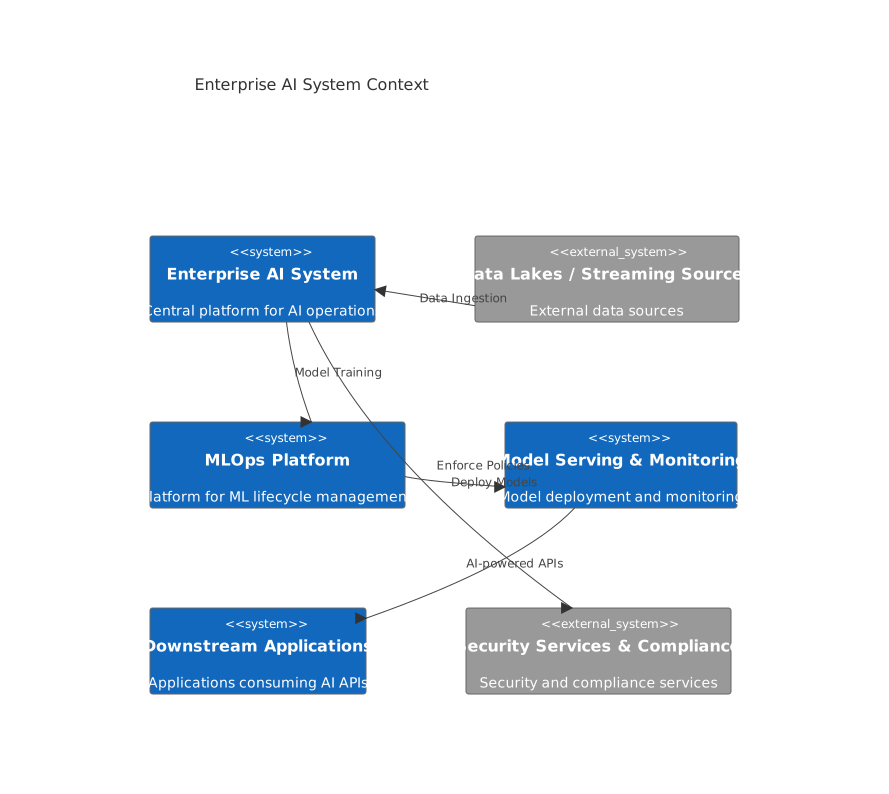
- Unified Data Pipelines: Employing streaming platforms (e.g., Apache Kafka) and data lakes for real-time and batch data flows supporting AI training and inference.
- Metadata and Catalog Services: Crucial for data governance, lineage tracking, and compliance auditing.
- API and Event-Driven Integration: Using REST/GraphQL APIs and event brokers to loosely couple AI microservices and downstream applications for flexible deployment.
AI/ML Infrastructure & Orchestration
- Containerized ML Workloads: Kubernetes orchestrated, leveraging GPUs with autoscaling pods tailored to batch or real-time inference.
- MLOps Platforms: Automated CI/CD for ML models, including version control, testing, and rollback capabilities (e.g., Kubeflow, MLflow).
- Model Serving and Monitoring: Multi-framework support, A/B testing, real-time telemetry for drift detection, and compliance logging.
System Design & Operational Considerations
- Zero-trust Security: Incorporating encryption at rest/in transit, identity federation, and strict RBAC for all AI services.
- Privacy-Preserving AI: Techniques such as federated learning and differential privacy are integrated to meet regulatory demands.
- Scalability: Hybrid cloud burst capabilities ensure workload elasticity and cost optimization.
- Reliability: Automated failover, backups, and disaster recovery strategies enable high availability.
This architecture empowers enterprises to deploy AI systems that are scalable, resilient, secure, and compliant with evolving regulations.
Section 3: Strategic Recommendations
Architecture Decision Frameworks
- Adopt goal-driven architecture frameworks like TOGAF extended with AI-specific viewpoints.
- Evaluate trade-offs between vendor lock-in and flexibility when choosing cloud-native vs hybrid vs on-prem AI platforms.
- Prioritize modular, loosely coupled architectures to future-proof AI investments.
Governance and Risk Management
- Implement enterprise-wide AI governance policies embedding ethical AI, security controls, and data privacy.
- Integrate continuous compliance monitoring within MLOps pipelines to detect policy deviations early.
- Foster cross-functional teams including data scientists, security, legal, and operations for holistic risk management.
Implementation Roadmap Guidance
- Start with pilot AI use cases tightly aligned to business outcomes to prove value and validate architecture.
- Develop a data foundation with strong governance as the backbone for scalable AI.
- Invest in MLOps/AIOps tools and automation to accelerate deployment velocity and operational maturity.
- Monitor infrastructure cost and performance closely, leveraging cloud elasticity and spot instances where feasible.
- Continuously evolve AI architectures incorporating emerging best practices, tools, and regulatory changes.
Enterprise architects should lead AI adoption by balancing innovation speed with prudent governance and sustainability to maximize long-term impact.
