China's AI Computing Network: Business Implications for 2025
China is constructing a vast nationwide AI computing network connecting data centers over 2,000 km, signaling a pivotal shift in AI infrastructure. This development enhances computational power, speeds AI application growth, and intensifies the global tech competition. Businesses must understand how China's strategic AI investments impact global AI innovation, enterprise ROI, and market dynamics for sustainable growth and competitive positioning in 2025.
Current Landscape
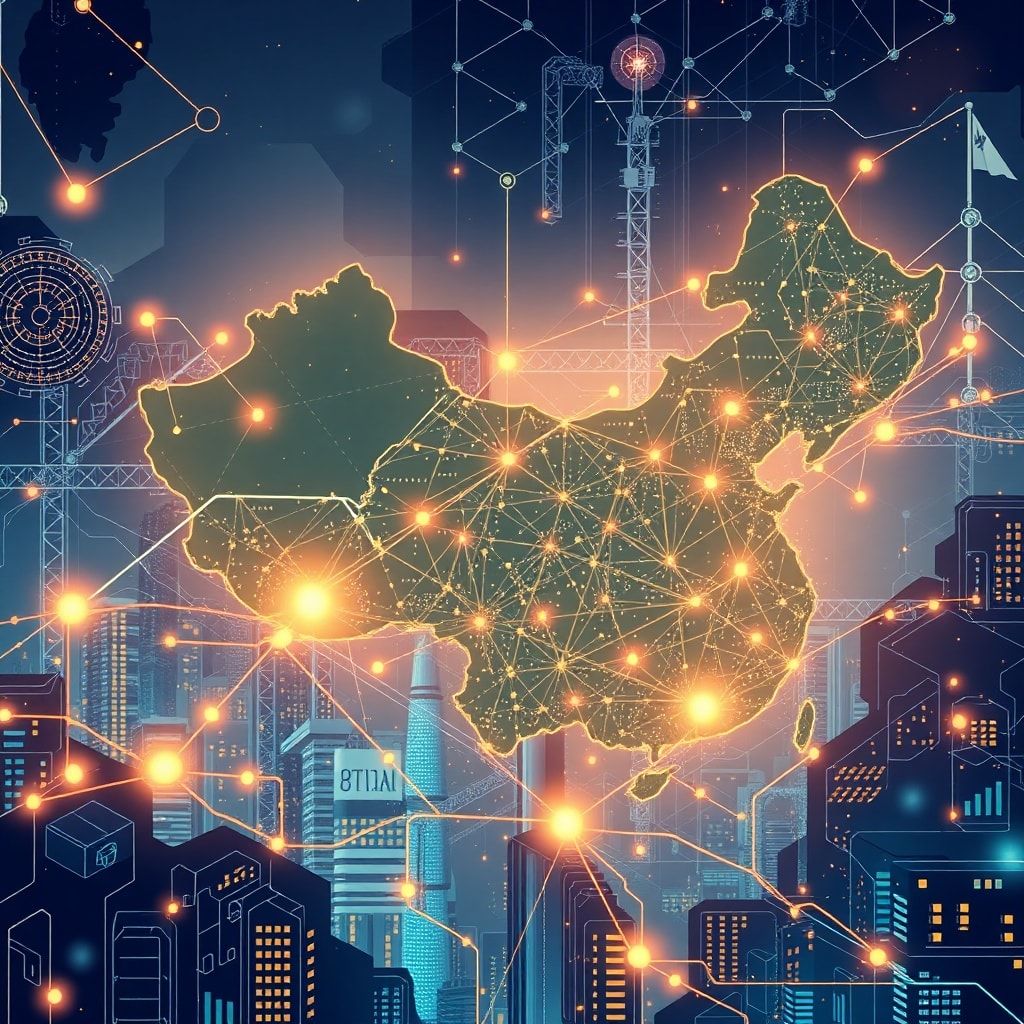
China has embarked on a transformative venture to connect its distributed data centers into a unified AI computing network spanning more than 2,000 kilometers. As of mid-2025, the country has built over 10.85 million AI server stacks, a scale driven by both private giants like Alibaba, Tencent, Baidu and state-owned enterprises collaborating under the Open Data Centre Committee (ODCC). This massive infrastructural effort exemplifies China's ambition to boost AI capabilities amid restrictions on advanced US chips.
Globally, AI adoption continues to grow rapidly. Research from McKinsey in late 2025 finds that 88% of organizations actively use AI in at least one business function, an increase from 78% the previous year. Yet, only about one-third are scaling AI enterprise-wide, indicating a phase of experimentation and pilot projects dominating the landscape. Business sectors such as technology, healthcare, and media are leading AI integration with a focus on innovation, cost reductions, and customer experience.
China's initiative reflects a broader trend of national strategies prioritizing AI infrastructure to gain a competitive edge. This aligns with global market growth predictions, which forecast enterprise AI investments and ROI to escalate as companies seek to embed AI into core workflows and decision-making processes. The rise of hyperscalers and cloud AI adoption further supports this trajectory.
Sources:
Business Impact & Applications
The promise of China's AI computing network is its potential to dramatically enhance AI training and inference speeds, thereby accelerating the deployment of AI solutions across industries. This translates into improved enterprise ROI through productivity gains, innovation acceleration, and new business model creation.
McKinsey reports that while broad enterprise-wide EBIT impact from AI remains limited, individual business units experience substantial benefits in areas like customer satisfaction and cost efficiencies. High-performing organizations leverage AI to redesign workflows and innovate with AI agents, leading to tangible returns. In this context, China's concentrated computing power can facilitate advancements in AI reasoning and frontier models, as highlighted by Morgan Stanley analysts.
Real-world enterprise use cases exemplify this shift. For instance, companies focusing AI efforts on backend operations with clear ROI goals report more sustainable adoption and measurable outputs. Leaders emphasize problem-driven rather than technology-first strategies, fostering workforce readiness and managing change effectively. These practices mitigate risks of hype and overreliance, paving the way for meaningful AI transformation.
Additionally, China's AI infrastructure development directly impacts global AI markets by fueling demand for specialized chips and cloud services, thus shaping supply chains and competitive dynamics worldwide. Hyperscalers' focus on cloud migration aligns with this trend, enabling companies to scale AI efficiently.
Sources:
Strategic Outlook
Looking ahead, China’s nationwide AI computing network exemplifies infrastructural modernization critical for competing in the global AI race. Business leaders should consider strategic investments that leverage enhanced computing resources and AI capabilities.
Key recommendations include focusing on domain-specific AI applications with clear business outcomes rather than broad speculative deployments. Embedding AI thoughtfully into existing workflows, supported by organizational change management, remains essential to scale value sustainably.
Investment guidance points to areas where AI efficiency gains are most pronounced: specialized semiconductor hardware, cloud service migration strategies, and AI software platforms enabling autonomous decision-making. Enterprises positioned to harness reasoning AI and advanced large language models stand to gain competitive advantages complemented by China's infrastructure enhancements.
Ultimately, the unfolding AI landscape demands leadership attentiveness to geopolitical shifts, technological innovation ecosystems, and workforce transformation. China's rapid progress signals a need for global business stakeholders to proactively adapt strategies, collaborate on infrastructure, and navigate AI's evolving economics prudently.